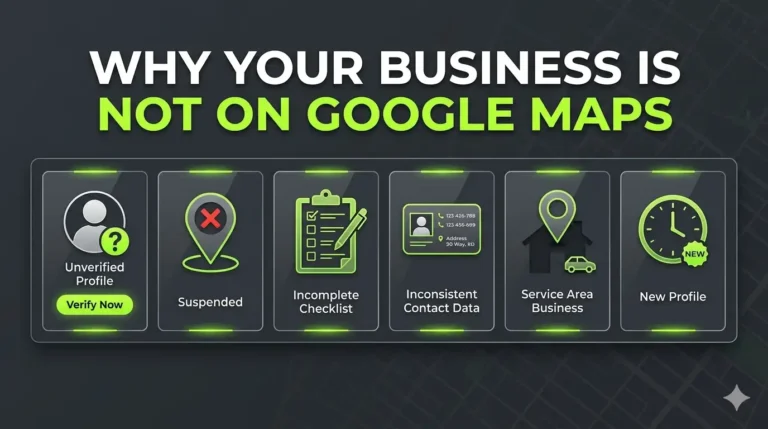
What Is a Local SEO Audit & What Does It Actually Cover
A dry cleaning business in Hornchurch, UK had been running for decades. Good reputation. Loyal customers. But when people searched for dry cleaners nearby on Google, three competitors showed up at the top every single time. Real Clean was nowhere.
The owner had no idea this was happening. Nobody had ever looked at what Google could and could not see about his business.
That is exactly what a local SEO audit does. It finds what is invisible, broken, or missing before it costs you any more customers.
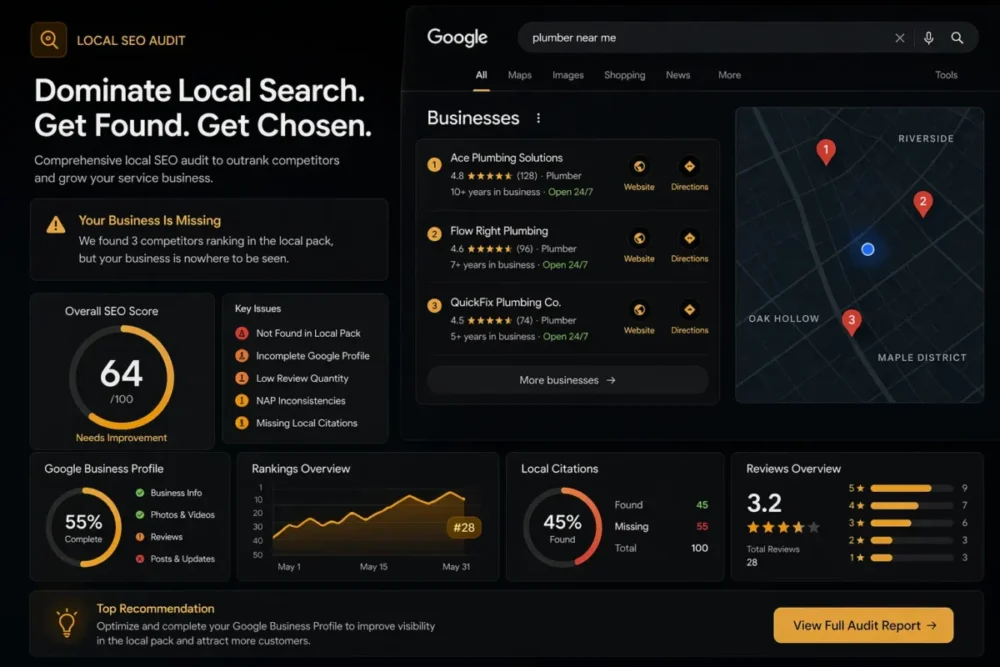
A local SEO audit is a full review of everything Google uses to decide whether to show your business in local search results and on Google Maps. It checks your Google Business Profile, your website, your business listings across the web, your reviews, and your competitors. The goal is to find exactly what is holding your rankings back so you can fix it in the right order.
- Why Your Business Needs a Local SEO Audit
- What a Local SEO Audit Actually Covers
- Area 1 Google Business Profile Audit
- Area 2 Website Audit
- Area 3 NAP Consistency and Citations Audit
- Area 4 Competitor Audit
- Area 5 Review and Reputation Audit
- What Happens After the Audit
- What a Free Local SEO Audit From Me Covers
- Frequently Asked Questions
Why Your Business Needs a Local SEO Audit
Most service business owners think their online presence is fine because they have a website and a Google Business Profile. But having them is not the same as having them work properly.
Google uses dozens of signals to decide which businesses to show in local search. If any of those signals are missing, broken, or inconsistent, your business loses visibility even if your service is better than every competitor around you.
I audited a dry cleaning business recently. The profile was verified and live. The owner thought everything was in order. But the business description was missing, secondary categories were not set, services had never been added, there were zero posts in the last six years, and the response rate on reviews was 35 percent. Google saw a business that looked inactive even though it was open every day.
Three competitors were showing up instead. All three had weaker reputations but stronger digital signals.
A local SEO audit tells you exactly where those gaps are.
| What the Owner Sees | What Google Sees |
|---|---|
| Verified and open business | Inactive profile with weak local signals |
| Good reputation offline | Low digital completeness and low engagement |
| Website and profile exist | Missing categories, services, posts, and responses |
What a Local SEO Audit Actually Covers
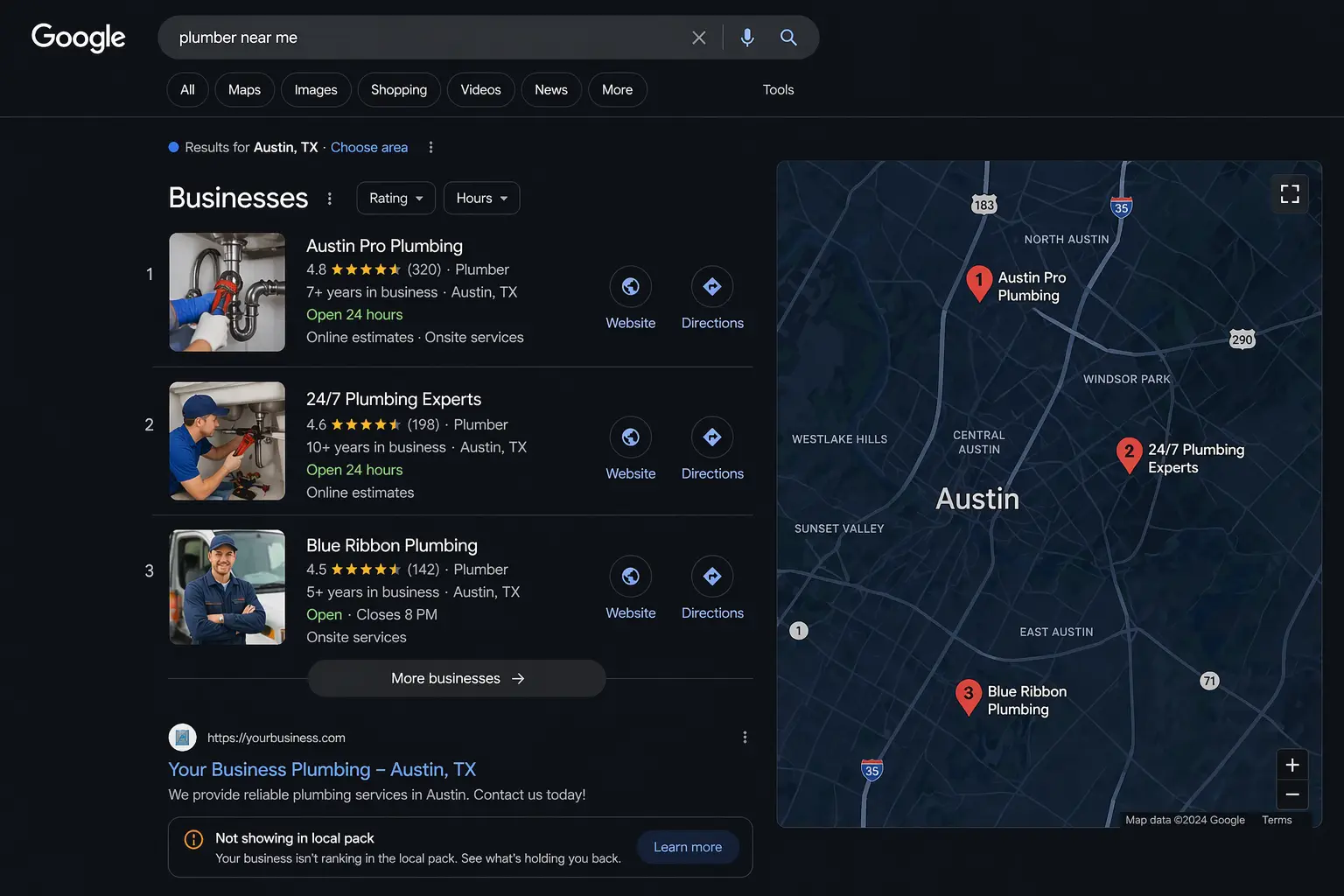
A proper local SEO audit has five main areas. Each one affects how Google ranks your business in local search.
Google Business Profile
Website
NAP and Citations
Competitors
Reviews and Reputation
Area 1 Google Business Profile Audit
This is where most local businesses have the most problems. And it is the most important part of any local SEO audit.
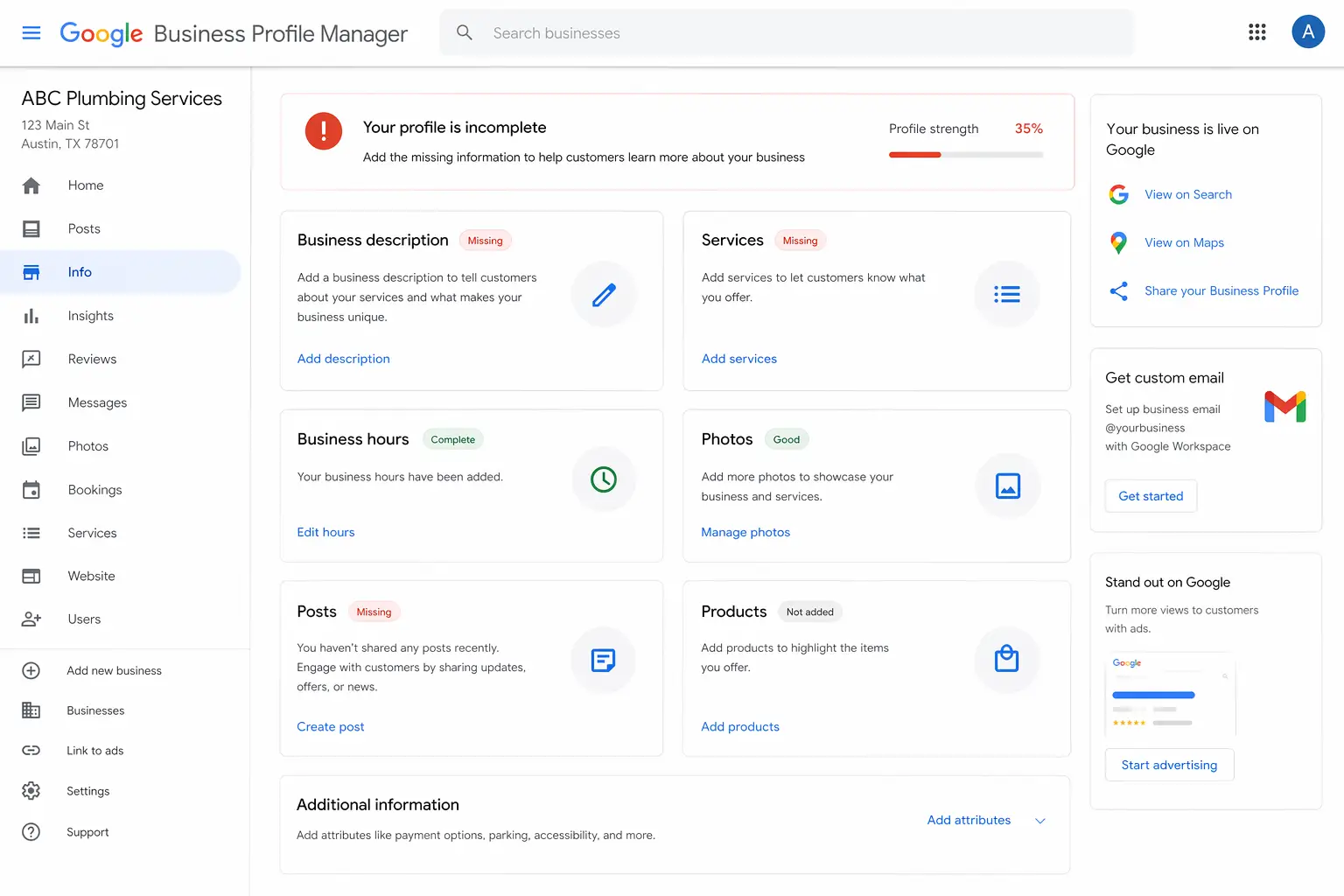
Your Google Business Profile is what Google uses to show your business on Maps and in local search. If anything is missing or wrong here, everything else you do will have less impact.
Here is what I check in every GBP audit:
| GBP Element | What Gets Checked |
|---|---|
| Basic information | Is the profile verified and live? Is the business name correct and matching everywhere else? Is the address accurate? Is the phone number right? Is the website linked? |
| Categories | Does the profile have the right primary category? Most businesses only set one category and miss several relevant secondary categories that could bring in more search traffic. |
| Description | Is there a business description? Many profiles have this completely blank. Google uses the description to understand what the business does and match it to relevant searches. |
| Services and products | Are services listed with descriptions? For a dry cleaner this might be dry cleaning, alterations, laundry, stain removal. Each service is a ranking signal. |
| Service areas | For businesses that travel to customers, are service areas defined properly? Just adding a city name is not enough. Specific neighborhoods and surrounding areas should be listed. |
| Opening hours and date | Are the hours accurate and complete including special hours? Is the business opening date filled in? |
| Photos | How many photos are there? When was the last one added? Are they real photos of actual work or stock images? Are they geo-tagged? Photo quantity and recency both affect rankings. |
| Posts and updates | When was the last post? Zero posts in months signals an inactive business to Google. |
| Reviews | How many reviews are there? What is the response rate? How recent is the last review and the last response? Negative review response rate matters too. |
| Q&A, messaging, call history | Are these features enabled? They contribute to profile completeness and user engagement signals. |
Area 2 Website Audit
If your business has a website, this becomes the second most important part of the audit. Google uses your website as a trust signal. A website also gives you the ability to rank for keywords beyond just your business name.
Here is what I check:
- Title tags: Does every page have a unique title tag? Does it include the target keyword and location? Is it under 60 characters?
- Meta descriptions: Is there a meta description on every page? Does it include the keyword? Is it between 140 and 160 characters?
- Heading structure: Is there one H1 on every page? Do the H2 and H3 headings follow a logical structure? Do headings include relevant keywords naturally?
- Image optimization: Do all images have descriptive alt text? Are image file names descriptive rather than “IMG_0034.jpg”? Are images in WebP format? Are file sizes optimized?
- NAP on website: Is the business name, address, and phone number on the website matching exactly what is on the Google Business Profile?
- Internal linking: Do pages link to each other logically? Are there orphan pages that no other page links to?
- External links: Does the site link out to relevant authoritative sources where appropriate?
- Schema markup: Is local business schema in place? This helps Google understand your business type, location, and contact details directly from your code.
- EEAT signals: Does the site show expertise, experience, authority, and trustworthiness? This means real photos, an about page, credentials, case studies, and genuine content. For medical and dental clinics this matters even more because Google applies extra scrutiny to healthcare sites — I cover the full approach in SEO for Medical Clinics.
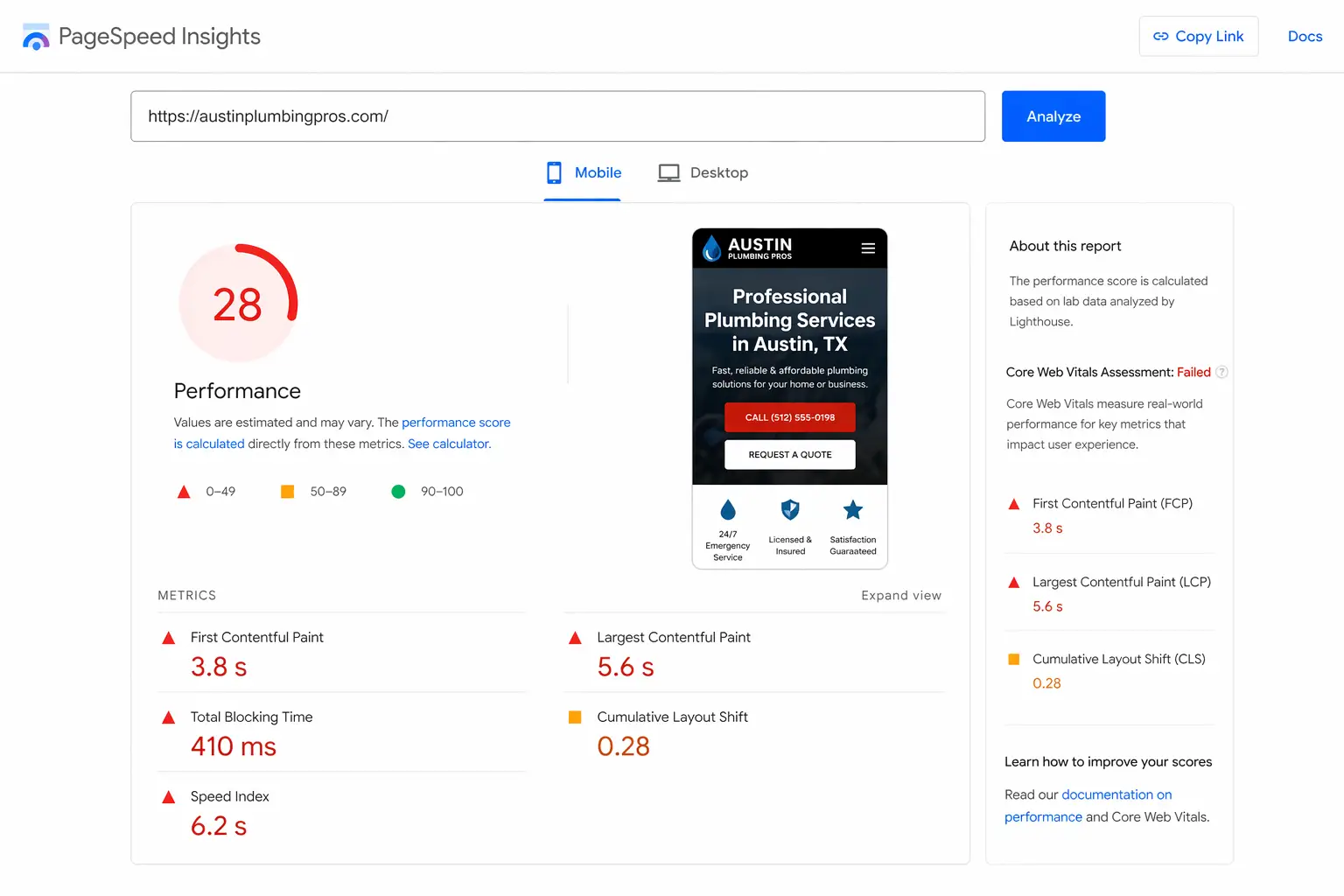
- Core Web Vitals: What is the PageSpeed score on mobile? What are the LCP, CLS, and INP scores? Is the site passing or failing?
- robots.txt and llm.txt: Is robots.txt set up correctly? Is anything accidentally blocked from Google? Is there an llm.txt file for AI crawlers?
- Mobile usability: Does the site work properly on a phone? Are tap targets large enough? Does content fit the screen without horizontal scrolling?
If you want to check speed immediately, you can run your site through PageSpeed Insights. If you want to understand how Google evaluates local ranking signals overall, Google’s own guidance explains it clearly in the context of relevance, distance, and prominence.
If your site is getting traffic but your phone isn’t ringing, I cover exactly why that happens in 6 Reasons Your Website Gets Traffic But No Calls.
Area 3 NAP Consistency and Citations Audit
NAP stands for Name, Address, and Phone number. Google finds your business information across hundreds of directories, listing sites, and platforms beyond just your own website and GBP.
When Google finds inconsistencies in this information, it loses confidence in your listing. This hurts your local rankings even if everything else looks good.
Common problems I find in this part of the audit:
Old phone numbers still live on directories from years ago. Business name spelled differently across platforms. Old addresses that were never updated after a move. Missing suite numbers. Some listings not claimed at all.
I check major directories including Google Business Profile, Bing Places, Apple Maps, Yelp, Facebook, Yellow Pages, and dozens of smaller local directories relevant to the specific market. For UK businesses I check directories specific to the UK. For UAE businesses I check directories relevant to that market.
Every listing needs to match the exact same business name, address format, and phone number.
| Bad Citation Signal | Correct Citation Signal |
|---|---|
| Old phone number on one directory | Same phone number everywhere |
| Address missing suite number | Address format fully matched across listings |
| Business name written differently across platforms | Exact same business name on all major profiles |
Area 4 Competitor Audit
Understanding why your competitors rank above you is just as important as understanding your own weaknesses.
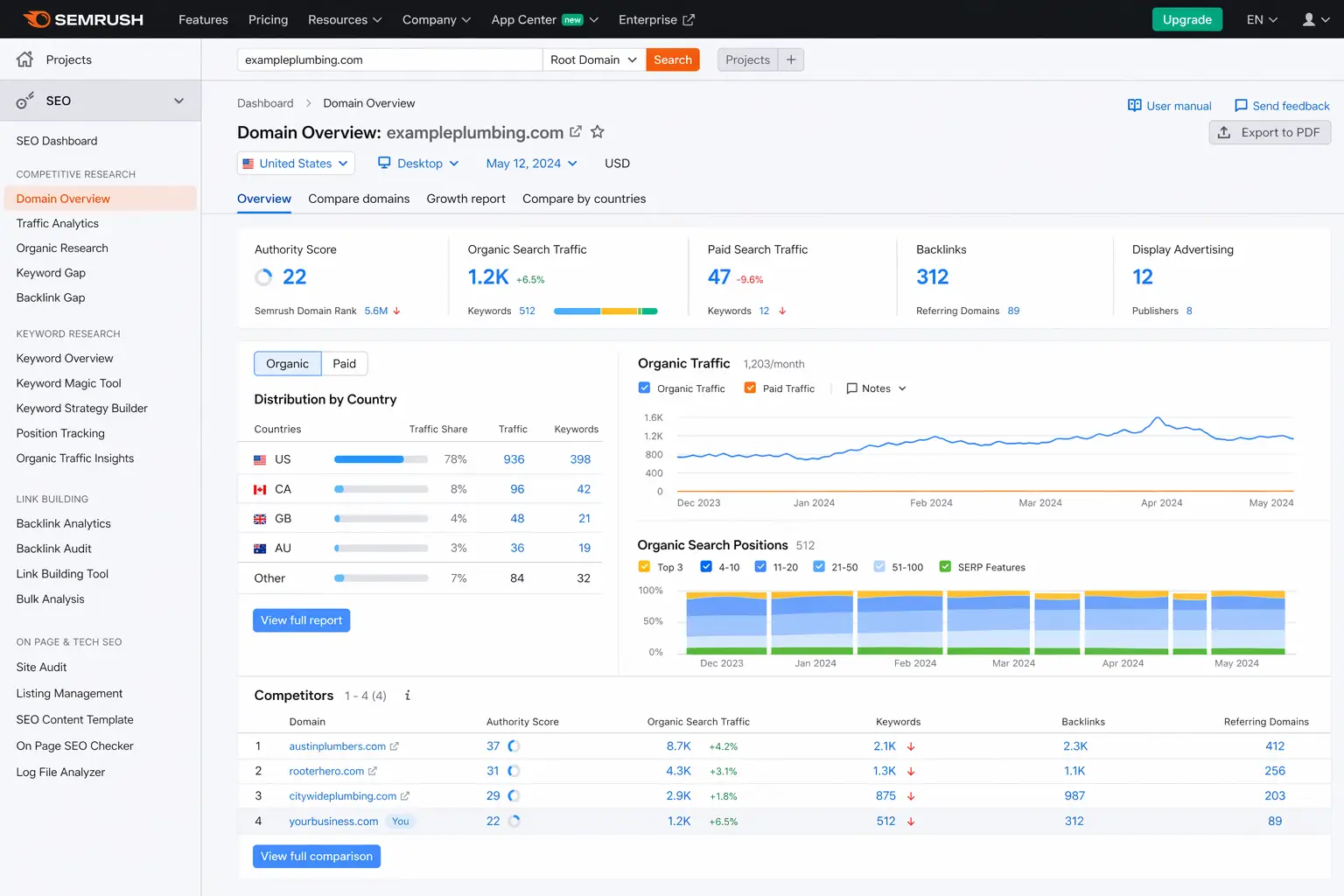
In every local SEO audit I look at the businesses currently occupying the top three Map Pack positions. For each one I check their authority score, their organic traffic, their number of backlinks and referring domains, how many organic keywords they rank for, and their GBP completeness.
This tells you two things. First, how strong the competition actually is. Second, what they are doing that you are not.
For the Hornchurch dry cleaning business I mentioned earlier, the top competitor had an authority score of only 10 and 643 backlinks. That is not a strong website. But they had an active GBP, regular posts, a full service list, and a website linked to their profile. Those basic signals were enough to dominate a market where the main competitor had none of them.
Knowing this changes your priorities completely. You do not need to build hundreds of backlinks. You need to fix your GBP and get a website live.
Knowing this changes your priorities completely. You do not need to build hundreds of backlinks. You need to fix your GBP and get a website live.
Area 5 Review and Reputation Audit
Reviews are one of the three main factors Google uses to rank local businesses alongside relevance and proximity.
In this part of the audit I look at total review count, average star rating, how recent the reviews are, what percentage of reviews have been responded to, and how negative reviews have been handled.
A business with 17 reviews and a 35 percent response rate, the last review response from over a year ago, and four unresponded negative reviews is sending a clear signal to Google that the business is not actively engaged. Competitors with 47 to 984 reviews and active responses will consistently outrank it.
This part of the audit tells you how big the review gap is and what the fastest path to closing it looks like.
What Happens After the Audit
A local SEO audit without a clear action plan is just a list of problems. The audit is only useful if it tells you what to fix, in what order, and what the expected impact of each fix is.
The order matters because some fixes have immediate impact and others take months to show results. Speed fixes and GBP optimization move fast. Citation cleanup takes weeks because directories need time to update. Content and authority building takes months.
I always prioritize by impact and speed. Fix what is actively hurting you first. Build on a clean foundation after.
You can see the full breakdown of Local SEO and Technical SEO services I use to do this.
| Fix Type | Expected Speed | Why It Matters |
|---|---|---|
| Speed fixes | Fast | Immediate usability and technical gains |
| GBP optimization | Fast | High local visibility impact |
| Citation cleanup | Weeks | Directories need time to update |
| Content and authority building | Months | Long term ranking growth |
If you want to see what this looked like in practice, the case study on how I fixed a Texas solar company’s visibility from scratch shows the exact order of fixes and the results at each stage. You can read that breakdown in mySolar Company SEO case study..
For a dry cleaning business in the UK, the path was different but the principle was the same. Fix the GBP signals first. Get a website live as a trust signal. Clean up citations. Build review activity. Then go after content gaps.
What a Free Local SEO Audit From Me Covers
When someone fills in the form on this site and asks for a free audit, here is exactly what I look at.
I check your Google Business Profile against the full checklist in Area 1 above. I note every missing field, every signal gap, and every activity problem.
If you have a website I run it through PageSpeed Insights, check the basic on page elements, and look at your heading structure and NAP placement.
I do a quick citation check to see if major directories have consistent information.
I look at your top three Map Pack competitors and assess how strong they actually are.
Then I come back to you with a plain English summary of what I found, what is hurting you most, and what I would fix first. No jargon. No 40 page PDF with graphs you will never read. Just honest feedback on your actual situation.
If it makes sense to work together after that, we talk about it. If it does not, you still walk away knowing more than you did before.
You can learn more about how I work and who I work with on my about page, or get in touch directly through the Hire Me page.
Frequently Asked Questions
A local SEO audit is a full review of everything that affects how your business appears in local Google search results and on Google Maps. It covers your Google Business Profile, your website, your business listings across directories, your reviews, and your competitors. The goal is to find exactly what is holding your rankings back so you can fix the right things in the right order.
A complete local SEO audit checklist covers five areas. Google Business Profile completeness including categories, services, photos, posts, and reviews. Website health including title tags, meta descriptions, headings, images, schema, and Core Web Vitals. NAP consistency across all online directories. Competitor analysis of the businesses currently ranking above you. Review count, recency, and response rate. Each area has specific items to check and specific fixes when problems are found.
A basic local SEO audit for a small service business can start from around $100 to $200 for a one time review. More detailed audits covering technical website issues, full citation checks, and competitor analysis typically cost more depending on the scope. Some consultants including myself offer a free initial audit covering the main areas before discussing any paid work.
For a full breakdown of what different price points include, read Local SEO Pricing: What It Costs and What You Actually Get.
A regular SEO audit focuses mostly on a website and its technical health. A local SEO audit adds several layers specific to local search including the Google Business Profile, NAP consistency across directories, local citation building, Google Maps visibility, and the three local ranking factors Google uses, relevance, distance, and prominence. If you are a service business trying to rank in your city or neighborhood, a local SEO audit is what you actually need.
A full audit once a year is a good baseline. But specific parts of the audit should be checked more often. GBP activity like posts, photos, and review responses should be ongoing. NAP consistency should be checked whenever you change your address or phone number. Competitor positions should be reviewed every few months because the local search landscape changes as competitors update their own profiles and websites.
In my experience, the Google Business Profile is the highest impact area for most local service businesses. An incomplete or inactive GBP is the most common reason a business is invisible on Google Maps even when their website and other signals are in reasonable shape. If I could only check one thing in a local SEO audit it would be the GBP.