How to Rank in Google Map Pack: Step by Step
The map pack is those three business listings that show up at the top of local search results, above everything else. If you’re not in it, you’re invisible to a huge share of people searching for what you do.
I’ve walked dozens of service businesses through this process. It’s not complicated, but it does need to be done in the right order.
Quick Answer: How Do You Rank in the Google Map Pack?
You rank in the Google Map Pack by strengthening three factors Google weighs directly: relevance, distance, and prominence. In practice, that means a fully optimized Google Business Profile, consistent citations across the web, a steady stream of reviews, and website content that clearly supports what your profile claims. No single fix gets you there. All three factors need attention.
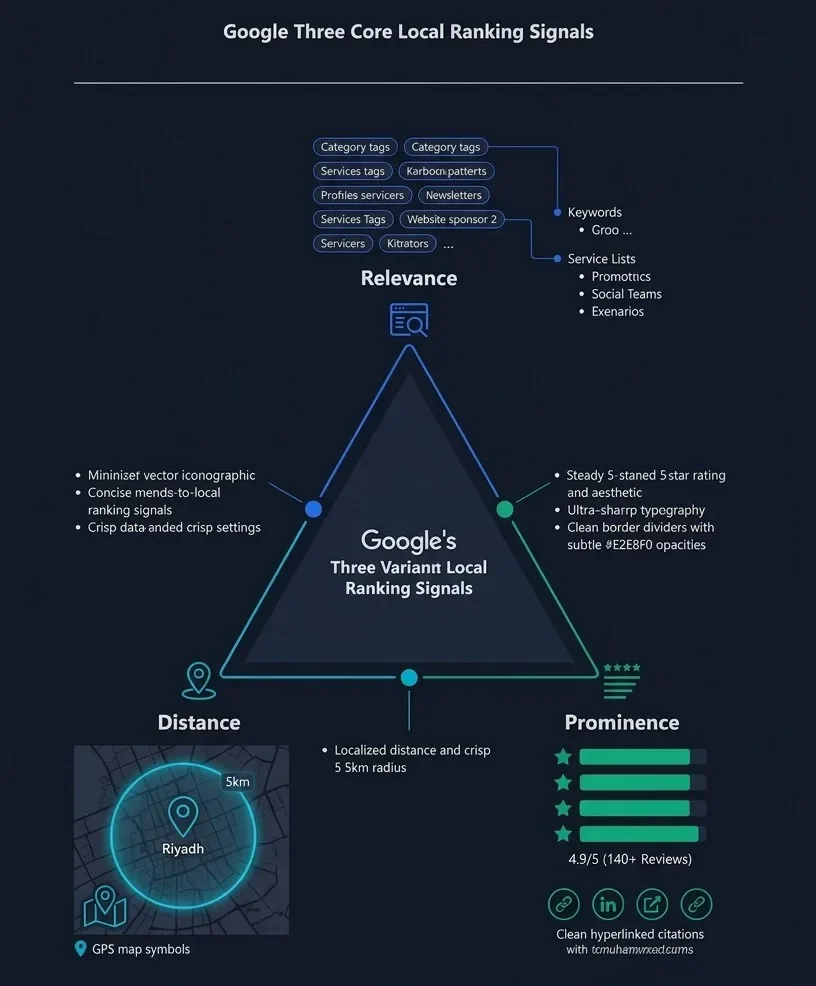
The Three Ranking Factors, Explained Simply
Relevance is how well your profile matches what someone searched for. A vague or incomplete profile is less relevant than one with clear categories, services, and descriptions.
Distance is how close your business is to the person searching, or to the location they typed in. You can’t change your physical location, but you can make sure your address and service area are set up accurately.
Prominence is how well known and trusted your business appears to be, based on reviews, mentions across the web, and overall activity. This is the factor most businesses can improve the fastest with consistent effort.
Google lays out these three factors here, and understanding them changes how you prioritize your time. Most businesses chase reviews first when their real gap is relevance.
The Fix: Step by Step
Step 1: Claim and fully verify your Google Business Profile
This sounds basic, but a surprising number of businesses have an unclaimed or unverified profile that Google treats with far less trust than a verified one.
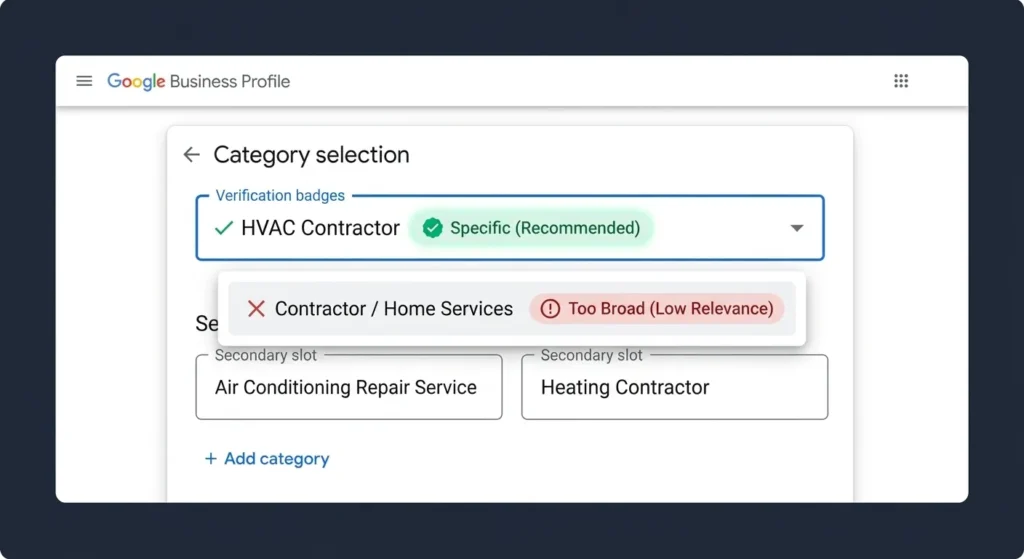
Step 2: Choose the most specific primary category available
“Plumber” beats “contractor.” “HVAC contractor” beats “home service business.” Specificity directly improves relevance for the searches that actually matter to you.
Step 3: Fill out every section of your profile completely
Services, business description, attributes, hours, and photos. An incomplete profile signals lower relevance than a complete one, even if the business itself is identical.
Step 4: Build consistent citations across the web
Your business name, address, and phone number need to match exactly across every directory and mention online. Inconsistent NAP data is one of the most common, most overlooked ranking blockers.
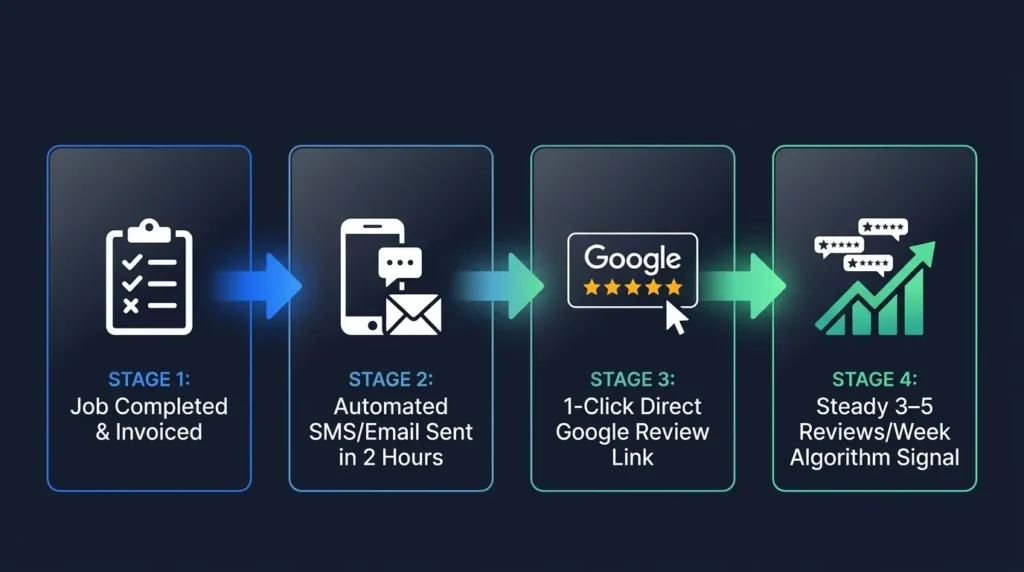
Step 5: Generate reviews steadily, not in a single push
A simple system, like a text or email sent after every completed job asking for a quick review, works better long term than a one-time campaign. Google’s algorithm favors consistent, recent activity.
Step 6: Respond to every review, good and bad
This is a small effort with a real signal behind it. An active, responsive profile reads as more trustworthy, both to customers and to Google.
Step 7: Support your profile with real website content
Your website should clearly reflect what your Google Business Profile claims. Service pages that match your listed services, location pages if you serve multiple areas, and genuinely useful content all reinforce relevance.
Step 8: Post updates through your Google Business Profile regularly
Google Posts don’t carry massive ranking weight on their own, but they’re one more sign of an active, maintained business, and they’re free to use.
A Pattern I See Often
The businesses that break into the map pack fastest aren’t the ones with the biggest budgets. They’re the ones that fix relevance and completeness first, then stay consistent with reviews and citations over time. The ones that struggle are usually skipping straight to reviews while their profile is still vague or incomplete underneath.
This mirrors what happened with an electrician in London I worked with, where the biggest early gain came from category and service area fixes, not from chasing more reviews right away.
How Long This Actually Takes
There’s no fixed timeline, and I won’t pretend there is one. Movement can start within a few weeks in a less competitive market, or take a couple of months in a dense, high-competition city. It depends on your current profile completeness, how competitive your specific category and location are, and how consistently you keep working the review and citation side after the initial setup.
Where to Start If You’re Overwhelmed
If your profile has gaps in several places at once, start by fixing your Google Business Profile completeness before touching anything else. Everything downstream, citations, reviews, content, works better once the foundation is solid.
If You Want Help Getting Into the Map Pack
If you’ve tried some of this already and still aren’t seeing movement, I’m happy to take a look at your specific profile and tell you honestly where the gap is. Free audit, no pressure.
Frequently Asked Questions
The Bottom Line
Ranking in the Google Map Pack comes down to three things Google actually measures: relevance, distance, and prominence. There’s no trick that skips past them.
Fix your profile completeness and category first, build consistent citations, and keep reviews coming in steadily. That combination is what moves the needle for most service businesses.
If you want a second opinion on where your specific profile stands, I’m happy to take a look and give you an honest answer.